School Attendance Challenges
We understand how challenging it can be for families when a child has challenges with school attendance. As parents and caregivers, we know that, in most cases, our children need to be in school. It’s not only academics that are important, but school is where they learn so much about socializing and building relationships beyond their family.
When our children are struggling, it can impact the entire family. For example, many parents and caregivers from our PCMH peer support groups have shared that they end up being frequently late for work or they have had to miss work entirely, which can be very stressful.
We know how hard this can be. That’s why we checked in with our child and youth mental health experts for their top tips to help families whose children and youth are struggling with school attendance challenges.
What is chronic school absenteeism?
Whether your child is occasionally missing school, often late, or skipping classes, attendance issues can take a real toll on children, youth, and families, especially when absences become frequent, prolonged, or persistent. Most schools consider a student chronically absent when they miss 10% or more of the school year—about 19 days—but there’s no hard rule. Even missing a few days can mean missing out on opportunities to learn, grow, connect with others, and access important school supports.
Absences are often labelled as excused (like for a doctor’s appointment) or unexcused (like skipping without permission), but it’s important to remember that all absences matter, because over time, they can impact a young person’s academic progress and well-being. To better understand school attendance problems, researchers Heney and colleagues (2019) describe four main types of attendance issues:
- School Avoidance: When a child misses school due to anxiety or other emotional or mental health challenges.
- School Withdrawal: When parents keep a child home—for example, due to concerns about school support or family responsibilities.
- School Exclusion: When a child is suspended, expelled, or otherwise prevented from attending school.
- Truancy: When a child is absent from school without permission and does not inform—or tries to conceal the absence from—their parent/guardian or the school.
Sometimes, a student’s attendance challenges involve more than one of these categories. Regardless of the reason, regular attendance is important for learning and achieving long-term success.
Why is school attendance important?
Attending school regularly helps children and youth learn, build friendships, and develop important social and emotional skills. It’s also where many young people access essentials like healthy meals, physical activity, and health services, including mental health support. Starting good attendance habits early helps set the stage for regular attendance as children grow. In high school, showing up consistently is linked to staying on track to graduate and having more opportunities for the future.
When children miss too much school, they can fall behind both academically and socially. They may start to feel disconnected and disengaged, which can affect their confidence and overall well-being. When young people miss a lot of school, it can be hard for them to go back. They might feel anxious or overwhelmed, and the longer they’re away, the harder it is to catch up or take advantage of the support and opportunities school can offer.
What causes chronic school absenteeism?
There are many reasons why kids might miss school. Some children and youth struggle with physical or mental health issues like feeling anxious, depressed, or sick, which can make it hard to get out the door in the morning. Others may have learning or developmental challenges that make school feel frustrating or overwhelming. If a child or youth is experiencing bullying or having trouble with friends or school staff, they might want to avoid school altogether. Family stress, such as a breakup, illness, or caring for younger siblings, can also impact attendance. For some families, unstable housing or unreliable transportation can make it difficult to get to school every day.

You can explore our resource Understanding Bullying and Managing Its Impact to learn more about how to support your child or youth if they are experiencing bullying or engaging in bullying behaviour.
School can be challenging for many reasons, and for some families, there are additional barriers that can make it even harder. If your family is new to Canada, part of the foster system, speaks a language other than English at home, or identifies as Indigenous, Black, or racialized, you may face unique challenges in navigating the school system. These challenges can sometimes lead to increased school absences.
School absenteeism is rarely caused by just one thing—it often involves a combination of personal, family, social, and systemic issues. That’s why it’s important to talk with your child or youth and try to understand what might be making it hard for them to attend. You don’t have to figure it out alone—there are supports that can help. Connecting with a trusted teacher, school social worker, or community organization can be a good first step.
Here are some additional resources you might find helpful:
- The Ontario Human Rights Commission has completed a report to address systemic anti-Black racism and discrimination in Ontario’s public education system. You can read the report to learn more.
- You can reach out to your Board’s Indigenous Education lead for support—every board in Ontario has one.
- Ontario schools have staff called Settlement Workers in Schools (SWIS) who can help newcomer students and their families settle into schools and communities.
How does it affect families?
When your child or youth is struggling, it can impact the entire family. For example, parents and caregivers may arrive late to work or need to take time off to support their child, attend meetings, or manage challenging mornings, which can be stressful and lead to financial hardship. Families may also receive calls from the school, which adds to the ongoing burden of navigating this situation. Many families report feeling stressed, overwhelmed, ashamed, guilty, angry, frustrated, or hopeless about what their child’s future may hold because of these challenges. Siblings may also be affected by changes in routines or family stress. You can explore our resource The Sibling Experience to learn more about supporting siblings of children or youth with mental health challenges.

It is important to acknowledge your own feelings and find ways to cope so you can best support your family. Building a trusted support network is one great way to do this.
Here are some ways you can build a trusted support network:
- Engage neighbours, friends, and family who can check in with you. Plan the concrete ways that they can help support you (e.g., checking in on your youth while you’re at work)..
- Connect with cultural and/or faith communities.
- Connect with other families who have gone through similar experiences, which can offer valuable insights, encouragement, and a sense of community. You can visit Parents for Children’s Mental Health to find a peer support group near you.
It’s important to focus on understanding your child or youth’s experience and supporting them in problem-solving, rather than jumping to future worry. Recognizing and managing your own expectations and worries is important because your child or youth will pick up on that. It’s okay to reach out for mental health supports for yourself, too.
How can I support my child or youth struggling with attendance?
There are many reasons why children and youth may struggle with school attendance, and not all of them are within your control as a parent or caregiver. Sometimes, the challenge lies in what’s happening at school; other times, it’s related to mental health, learning needs, or life circumstances, and often, it’s a combination of these factors. What’s important to remember is that you’re not alone, and this isn’t about blame. While there is very little research about what works when it comes to school attendance problems, here are some strategies that have worked for other families.
- Focus on your relationship with your child or youth
- Work with your child or youth to set routines and establish good sleep and morning habits
- Build on your child or youth’s strengths and interests, including extracurricular activities
- Celebrate small successes (e.g., attending half a day, a few days in a week, or a full week). Each step forward matters.
According to the Collaborative Problem-Solving model (Greene, 2014), the first step is to understand what’s getting in the way of school attendance. These factors can change over time, and your child or youth may find it difficult to talk about them. Approaching the issue with curiosity and empathy can make a big difference. Try to start by listening to your child or youth without immediately jumping into solutions. They need to feel heard and understood before they’re ready to problem-solve. Your child needs to know that you’re on their side—even if they push you away. Shame and frustration often come up when kids miss school, but underneath those feelings, there may be fear, self-doubt, or a sense of not belonging. Creating space for open, honest conversations helps build trust and lets your young person know they’re not facing this alone.
“Be curious, not furious. Start by listening and hearing them out. Once you better understand what they are going through, you can ask if they want your help. You could say, “How do we get to a place where you can go to school regularly?”
Here are some conversation starters you can try:
- Have you been feeling anxious, overwhelmed, or disconnected from school lately?
- Are you finding your classes too hard or too boring?
- What is stressing you out at home? With peers? With school staff?
“We’ve found that it helps to do a neutral activity with our child (e.g. Lego, video games, etc.) and then casually bring up how much we hated school ourselves when we were kids. We might say, “Sometimes it can be incredibly difficult at school. I remember some kids who made it really hard for me. How about you?”
Try to put your own worries aside and not make assumptions when they are telling you about their experience. Take what they say seriously and validate their feelings. Once you have a better understanding of their perspective, they may be more open to working together to find a solution.”
Not all solutions work for every individual. For example, helping a young person with anxiety gradually face their fears and return to school can be effective, but if a child or youth is experiencing bulling or exclusion, the response needs to look very different. This is why understanding why your child is missing school is essential before jumping into how to address it.
If your child or youth is able to open up, that’s a strong starting point for finding solutions together. If they’re not ready, be patient and continue showing up with care and consistency. Focusing on relationships doesn’t mean lowering your expectations, but it does mean that you are your child or youth’s greatest ally in this process. Remember, change takes time, and setbacks are part of the journey. Celebrate small successes and understand that every young person’s path is unique.
“You may need to manage your own expectations, and building your support network can help you cope and manage your emotions so that you can best support your family. For example, not every student finishes high school in four years—it’s okay if it takes five or six.”
Whatever ideas you and your child or youth discuss, the next step is to bring the school into the conversation so that they can support developing an individualized plan for your young person to return to school.
Where can I go for help?
You don’t have to face this alone. Don’t hesitate to ask for help from school staff, mental health professionals, or community supports. Just as importantly, remember to take care of yourself. Supporting a child or youth through school attendance challenges is tough, and you’re doing your best in difficult circumstances. Here are some helpful resources to consider.
1. Your Child’s School
Connecting with your child’s school is an important step. Reach out to teachers, guidance counsellors, or the principal—they care about your child’s well-being and want to help. Every school board also has an attendance counsellor who can support families and help explore different school options or programs in the community. Parents and caregivers may sometimes feel blamed when a child is missing school, but it’s important to remember that you are not alone. The goal is to collaborate with the school team to find solutions that truly support your child or youth.
Keep the conversation focused on what your child or youth needs to feel safe, supported, and ready to attend. Schools have a responsibility to be welcoming, inclusive spaces where all students feel they belong. While staff may offer suggestions for how parents can help at home, the focus should remain on understanding and meeting your child or youth’s needs together.
You can explore our resources “Communicate with Your Child’s Teacher (elementary school)” and “Communicate with the School (high school)” for tips on how to do this effectively.
“When my son started high school, he identified a teacher who he felt listened to him and understood what he needed. I let him take the lead and identify who he felt comfortable with, and then I supported him with building the relationship from there. Without this relationship, my son would not have been as successful at school.”
“Some school staff may have more capacity than others to provide direct support, so try to connect with a staff member who can be a trusted adult for your child or youth at school. It can be very helpful to share with school officials that your child or youth has a mental health challenge or illness. That way, teachers and administration will better understand some of the accommodations your child or youth might need to reengage with the school routine.”
2. Community Mental Health Services
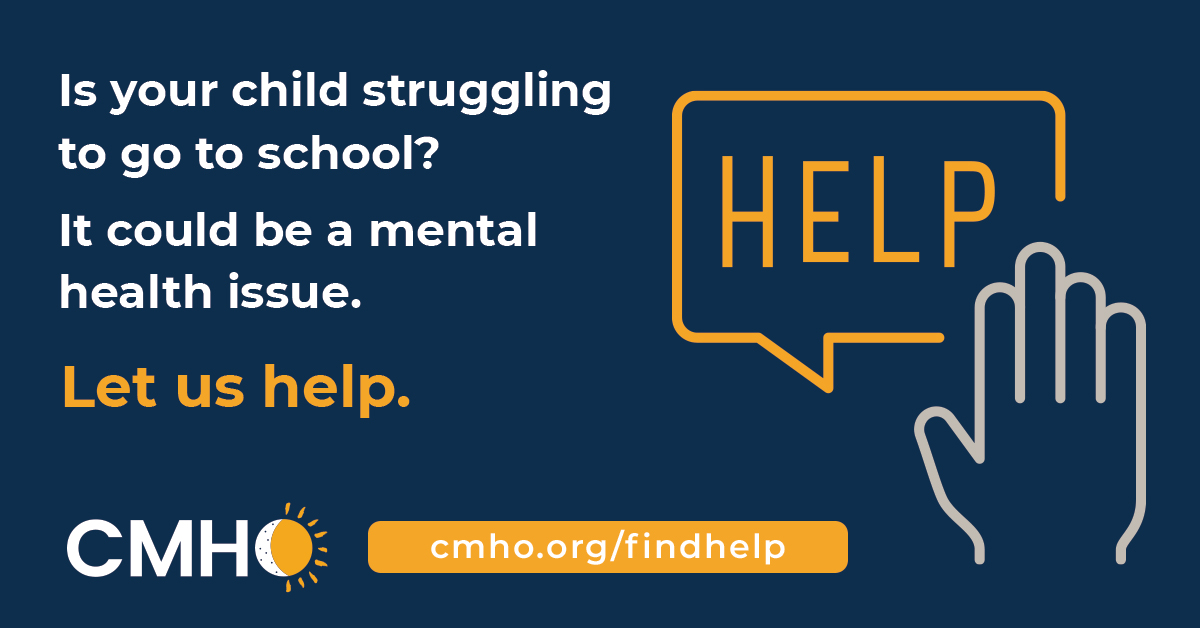
You can access your local child and youth mental health services by using our Find Help tool. These services can be a great first step in facilitating difficult conversations and addressing any underlying challenges your child or youth may be facing. Children and youth aged 17 and under can also directly connect with a counsellor by contacting One Stop Talk. You can support your child or youth in making this connection by joining the call.

3. Connect with Other Parents and Caregivers
Connecting with other families to talk about these challenges is a great way to feel less alone, gain new ideas for how to manage your child or youth’s needs, and learn about supports and services in your community. Connect with Parents for Children’s Mental Health to meet other parents and caregivers who “get it.”
Additional Resources
- Attendance Works:Handouts for Families (note: this is a clinician-recommended American source, so the language will be based on the US school system)
Share This Resource
Thank you to the parents, caregivers, and child and youth mental health practitioners who shared their expert advice for this resource.
CMHO Partnerships Council, PCMH
Natasha McBrearty, Clinical Supervisor, Youville Centre
Canadian School Attendance Partnership
Deb Chiodo, Ph.D., Centre for Addiction and Mental Health (CAMH)
Karene Martin-Russell, Child and Family Clinician, EveryMind
Sofia Pelaez, Youth and Family Counsellor, EveryMind
Michael Borges, Mental Health Therapist, Maltby Centre